









Table of Contents
Choosing the right baby car seat is essential for your child’s safety and comfort during car journeys. With different types, sizes, installation methods and features available, finding the right option can feel confusing for parents. This baby car seat buying guide explains what to check before buying, how to choose a car seat based on your child’s age, height and weight, and how to compare safety features, ISOFIX compatibility and budget. It also covers popular brands and where to buy baby car seats online in India, helping you make an informed choice for your little one.
Quick Verdict: Which Baby Car Seat Should You Buy?
Choose a baby car seat based on your child’s age, height, weight and your car’s compatibility. Prioritise safety, proper fit, ease of installation and comfort over price alone. Compare different types and brands on FirstCry, Amazon India and Flipkart to find the right option for your child.
Key Facts
- Age alone is not enough: Always check the car seat’s specified height and weight limits.
- Rear-facing is important for younger children: The AAP recommends keeping infants and toddlers rear-facing for as long as possible within the seat’s limits.
- Convertible seats can extend usability: Many models can transition from rear-facing to forward-facing as the child grows.
- ISOFIX is an installation system, not a guarantee of safety: The seat and vehicle must be compatible, and installation instructions still need to be followed.
- Harness fit matters: A harness should be snug, flat and correctly positioned according to the manufacturer’s instructions.
What Is a Baby Car Seat and Why Do You Need One?
A baby car seat, also called a child restraint system, is designed to secure a child inside a vehicle and reduce their movement during sudden braking or a crash. Children are smaller and have different body proportions from adults, so an ordinary vehicle seat belt may not fit them correctly. A properly selected and installed child restraint is designed around the child’s size and the way the restraint interacts with the vehicle.
The most important consideration is therefore not simply buying a seat labelled “baby car seat”. Parents should choose a restraint that matches the child’s size, developmental stage and the vehicle’s installation system.
Types of Baby Car Seats and Their Uses
Different car seats are designed for different stages. The categories can overlap, so always follow the individual product’s instructions.
1. Rear-Facing Baby Car Seat
A rear-facing seat positions the child towards the back of the vehicle.
This is particularly important for infants and younger toddlers. The American Academy of Pediatrics recommends that infants and toddlers remain rear-facing for as long as possible, until they reach the highest height or weight allowed by the particular seat.
Best suited for: Newborns, infants and younger toddlers, depending on the seat’s limits.
Look for:
- Appropriate newborn or infant size range
- Secure harness
- Adequate head and body support
- Correct recline
- Compatibility with your vehicle
2. Convertible Car Seat
A convertible car seat can generally be used in more than one configuration. Depending on the model, it may support rear-facing use initially and forward-facing use later.
This can be useful for parents who want one seat to remain in the vehicle as the child grows.
Best suited for: Parents looking for longer-term use.
Potential limitation: Convertible seats can be larger and heavier than infant-only seats, so check available space in the vehicle.
3. Forward-Facing Car Seat
Forward-facing seats are intended for children who have outgrown the rear-facing limits of their particular seat.
For younger children, a harnessed forward-facing seat should generally continue to be used within the manufacturer’s limits rather than moving prematurely to a booster.
Best suited for: Children who have outgrown rear-facing use but still require a harness.
4. Booster Seat
A booster raises the child so the vehicle’s lap-and-shoulder belt can fit correctly over the stronger areas of the body.
A booster is not simply a smaller car seat. It is intended for a child who has outgrown the forward-facing harness but is not yet large enough for the vehicle seat belt to fit correctly.
Best suited for: Older children who meet the booster seat’s size requirements.
Baby Car Seat Buying Guide: What Should You Check Before Buying?
1. Check Your Child’s Height and Weight
Do not select a seat based only on age. Manufacturers specify height and/or weight limits for each configuration. UN Regulation No. 129, for example, uses child height as an important basis for classification while also specifying maximum permitted weight.
Before purchasing, note your child’s:
- Current age
- Height
- Weight
- Seating stage
- Whether they have outgrown their current restraint
2. Choose the Correct Direction of Travel
For younger children, rear-facing travel should be maintained for as long as the particular seat permits. When the child reaches the rear-facing height or weight limit, follow the manufacturer’s instructions for transitioning to the forward-facing configuration. Avoid switching simply because your child appears uncomfortable or wants to look forward.
3. Check the Installation Method
Car seats may use different installation methods, including:
- Vehicle seat belt
- ISOFIX
- Lower anchors where supported
- ISOFIX combined with a support leg or top tether, depending on the product
Car seats are available with different installation methods, including ISOFIX and seat-belt installation. Before buying an ISOFIX model, check whether your car has compatible anchor points and whether the specific car seat is approved for use with your vehicle.
4. Look for an Appropriate Harness
A 5-point harness is common on infant and child car seats. It secures the child around the shoulders, hips and between the legs.
The harness should sit flat and snugly against the child. NHTSA advises checking that harness straps are not twisted and that excess material cannot be pinched at the shoulder.
5. Check Safety Certification or Approval Information
Do not rely on vague claims such as “extra safe” or “premium safety”. Look for clearly stated certification or approval information on the product, packaging and manufacturer’s documentation. UN Regulation No. 129, commonly associated with i-Size child restraint systems, introduced height-based classification and side-impact testing requirements.
Some products sold in India also list ECE R44/04 compliance. For example, the R for Rabbit Jumping Jack Grand listing explicitly identifies ECE R44/04 certification. Parents should verify the exact approval information for the individual model rather than assuming that every product from a particular brand has the same certification.
6. Check Whether the Seat Fits Your Car
A car seat may be suitable for your child but still be impractical for your vehicle.
Check:
- Rear-seat width
- Seat-belt routing
- ISOFIX anchor location
- Top-tether availability, where required
- Front-seat clearance when the child seat is rear-facing
- Whether multiple child seats need to fit side by side
Always read both the car seat manual and vehicle owner’s manual before installation.
7. Consider Comfort and Everyday Usability
Useful features can include:
- Multiple recline positions
- Adjustable headrest
- Padded harness
- Removable cover
- Washable fabric
- Adequate ventilation
- Easy harness adjustment
These features do not replace safety requirements, but they can make everyday use easier.
8. Think About Long-Term Use
A convertible or all-in-one seat may appear more expensive initially but could remain useful for several stages. However, longer claimed usability should not be the only deciding factor. The seat still needs to fit your child correctly at every stage.
How to Choose the Right Baby Car Seat for Your Child
| Child’s stage | Suitable seat type | What to prioritise |
|---|---|---|
| Newborn/infant | Rear-facing infant or convertible seat | Rear-facing limits, recline, harness and newborn fit |
| Infant/toddler | Rear-facing convertible seat | High rear-facing limits and correct installation |
| Older toddler/young child | Convertible/forward-facing seat | Harness fit, height/weight limits and tether where applicable |
| School-age child | Booster when appropriate | Correct seat-belt positioning |
| Older child | Vehicle seat belt when it fits properly | Lap belt across upper thighs and shoulder belt across chest |
These are general stages rather than universal age cut-offs. The manufacturer’s height and weight limits should always take priority.
Best Baby Car Seats to Consider in 2026
Here are some baby car seats worth considering from brands like Babyhug, Bonfino, R for Rabbit, LuvLap, and Joie to suit different needs and budgets.
1. Babyhug Amber Car Seat Cum Carry Cot With Rocking Base
Rating: ⭐ 4.3/5
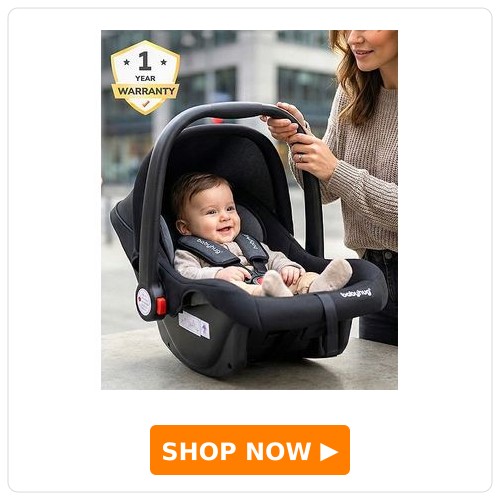
The Babyhug Amber Car Seat Cum Carry Cot is a versatile 4-in-1 system designed for infants from birth up to 15 months. It functions as a rear-facing car seat, a portable carry cot, a gentle rocker, and a convenient feeding chair. This black model features a secure 3-point harness, a deeply padded seat for comfort, and a removable canopy to shield your baby from the sun.
Age Group: 0 to 15 Months
Key Features:
- 4-in-1 design: car seat, carry cot, rocker, and feeding chair
- Supports infants up to 13 kg (Group 0)
- 3-point safety harness for security
- Adjustable handle for carrying, rocking, and stable positions
- Removable and machine-washable seat cover for easy cleaning
- Rocking base to soothe and relax the baby
Price (Approx): ₹3,538 (Prices and discounts may vary depending on offers)
Best for: Parents seeking a single, travel-friendly solution for infant transport both in and out of the car.
Where to Buy: Buy at FirstCry.com
2. R for Rabbit Jack N Jill Grand Isofix Baby Car Seat
Rating: ⭐ 4.3/5
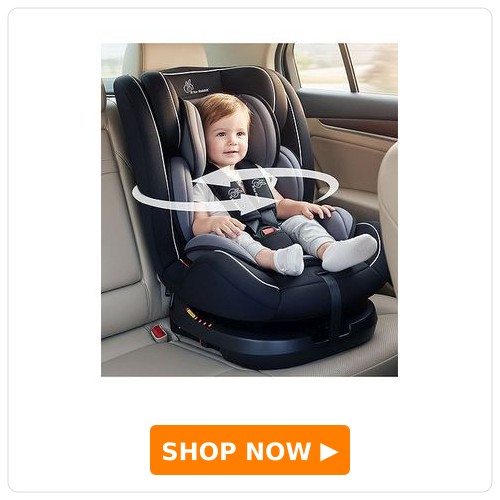
The R for Rabbit Jack N Jill Grand Isofix is a convertible car seat designed to grow with your child from birth up to 12 years. This black and grey model is ECE R44/04 safety certified and features an ISOFIX mechanism for secure installation. Its 360-degree rotatable design allows for easy switching between rear-facing and front-facing positions without removing the base.
Age Group: 0 to 12 Years
Key Features:
- ECE R44/04 Safety Certified
- ISOFIX mechanism for stable installation
- 360-degree rotatable seat for easy access
- 5-point safety harness
- Suitable for ages 0 to 12 years, up to 36 kg
- Removable and washable seat cover
Price (Approx): ₹12,034 (Prices and discounts may vary depending on offers)
Best for: Families seeking a single car seat solution that adapts from infancy to childhood.
Where to Buy: Buy at FirstCry.com
3. Joie Baby Seat Steadi R129 Moon Rock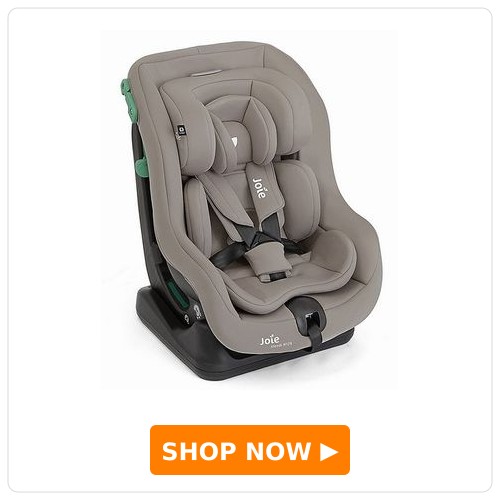
The Joie Steadi R129 is a convertible car seat designed for children from birth up to 18 kg, or approximately 4 years old. This ‘Moon Rock’ colored seat functions in both rear-facing and forward-facing configurations to adapt as your child grows. It installs using a standard 3-point vehicle belt and features four recline positions for comfort and safety. The design meets ECE R129 safety standards and includes side impact protection and a Tri-Protect headrest.
Age Group: 0 to 48 Months
Key Features:
- Suitable for rear-facing (birth to 4 years) and forward-facing (15 months to 4 years)
- Installs with a vehicle’s 3-point seat belt
- Features 4 recline positions: 1 rear-facing and 3 forward-facing
- Tri-Protect headrest with Intelli-Fit memory foam for security
- Grow Together multi-height headrest and harness system
- Removable and washable fabric covers for easy cleaning
Price (Approx): ₹15,299 (Prices and discounts may vary depending on offers)
Best for: Parents looking for a single, long-term car seat that adapts from the newborn stage through the toddler years.
Where to Buy: Buy at FirstCry.com
4. Chicco Unico Evo Car Seat
Rating: ⭐ 4.8/5
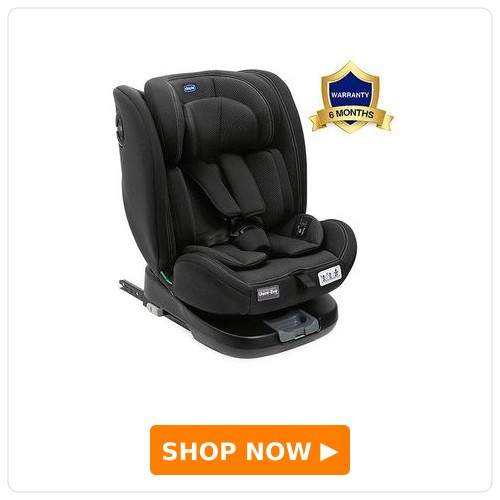
The Chicco Unico Evo is a long-lasting convertible car seat designed to accompany a child from birth up to approximately 12 years old. This black car seat features a 360° rotation system for easy access and can be installed using the Isofix system with a top tether. It offers five reclining positions in both rear-facing and forward-facing modes and adapts to a child’s growth by adjusting the headrest and harness simultaneously.
Age Group: 0 to 12 Years
Key Features:
- 360° rotation system for easy boarding
- Grows with child from 0 to 12 years (40-150 cm)
- Installation with Isofix connectors and top tether
- 5-point safety harness with padded cushions
- Simultaneous one-hand adjustment of headrest and harness
- Removable and washable cover for easy maintenance
Price (Approx): ₹28,791 (Prices and discounts may vary depending on offers)
Best for: Parents seeking a single, long-term car seat that adapts from infancy through childhood.
Where to Buy: Buy at FirstCry.com
5. Bonfino Pro Shield R129 iSize Isofix Convertible Car Seat
Rating: ⭐ 3.8/5
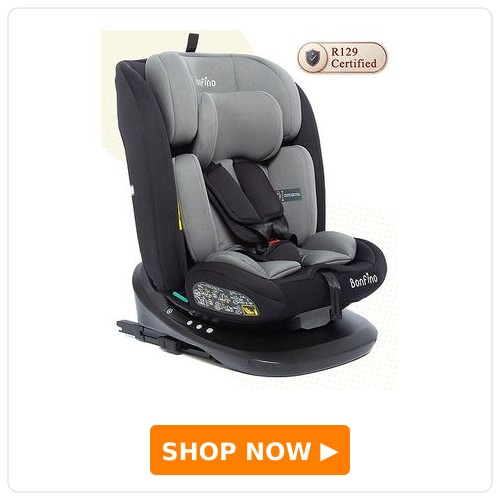
The Bonfino Pro Shield is a convertible car seat designed to grow with your child from birth up to 6 years. It adheres to R129 i-Size safety standards and uses an ISOFIX system with a top tether for secure installation. The seat features a 360-degree rotation for easy access and supports both rearward and forward-facing positions. For comfort, it includes a memory foam headrest, shock-resistant foam, and multiple recline positions.
Age Group: 0 to 6 Years
Key Features:
- R129 i-Size compliant safety standard
- ISOFIX system and top tether installation
- 360-degree rotatable seat for easy access
- 17-position adjustable headrest with memory foam
- 5-point safety harness system
- Detachable and washable linen fabric cover
Price (Approx): ₹12,346 (Prices and discounts may vary depending on offers)
Best for: Families seeking a single, long-term car seat solution with modern safety and convenience features that adapts from infancy through early childhood.
Where to Buy: Buy at FirstCry.com
Quick Comparison
| Product | Stated age range | Key features | Approx. price | Best suited for |
|---|---|---|---|---|
| Babyhug Amber Car Seat Cum Carry Cot | 0 to 15 Months | Carry cot, rocking base, adjustable handle | 3,538 | Parents looking for a carry cot-style seat |
| R for Rabbit Jack N Jill Grand ISOFIX | 0 to 12 Years | ISOFIX, 360° rotation, 5-point harness | 12,034 | Parents seeking a convertible seat |
| Joie Steadi R129 | 0 to 48 Months | R129-labelled model | 15,299 | Parents looking for a seat suitable from birth |
| Chicco Unico Evo | 0 to 12 Years | Car seat from Chicco | 28,791 | Parents comparing established baby gear brands |
| Bonfino Pro Shield R129 i-Size ISOFIX | 0 to 6 Years | ISOFIX, 360° rotation, reclining seat, adjustable headrest | 12,346 | Parents looking for a feature-rich convertible seat |
Note: Age and weight ranges, prices, and safety specifications should be verified on each product page before publication, as they may vary by model or listing.
Common Mistakes to Avoid When Buying a Baby Car Seat
- Choosing Based Only on Age: Two children of the same age can have different heights and weights. Always check the seat’s limits.
- Moving to Forward-Facing Too Early: A child does not need to face forward simply because they have reached a particular birthday. Follow the rear-facing limits of the seat and manufacturer guidance.
- Buying an ISOFIX Seat Without Checking the Car: ISOFIX compatibility needs to be checked between the vehicle and the particular child restraint.
- Assuming an Expensive Seat Is Automatically Better: Price can reflect materials, features, brand positioning or installation systems, but parents should first establish whether the seat is appropriate for their child and vehicle.
- Ignoring the Manual: Installation varies between seats and vehicles. NHTSA specifically recommends reading both manuals before installation.
- Using Bulky Clothing Under the Harness: Heavy coats can interfere with a snug harness fit. NHTSA advises securing the child in the harness first and placing coats or blankets over the harness where necessary.
Baby Car Seat Safety, Care and Maintenance
A correctly selected seat still needs to be installed and used properly.
1. Before Every Trip
- Make sure the seat is securely installed.
- Check that the harness is flat and snug.
- Confirm that the child is sitting correctly.
- Remove objects that could interfere with the harness.
- Check that the seat remains within its manufacturer’s usage limits.
For forward-facing installations, NHTSA advises checking that the seat does not move excessively and using the vehicle’s tether anchor where required by the seat’s installation method.
2. Cleaning
Follow the product manual for cleaning instructions. Many current car seats have removable or washable covers, but the harness and structural components should only be cleaned using methods permitted by the manufacturer.
3. After a Crash
Do not assume that a child restraint is still safe simply because it looks undamaged after a collision. Follow the manufacturer’s replacement guidance after a crash.
4. Do Not Use a Car Seat as a Routine Sleeping Space
Rear-facing infant and convertible car seats are designed for travel. The AAP notes that these seats should be used for travel rather than routine sleeping, feeding or other activities outside the vehicle.
FAQs about Baby Car Seats
1. Which baby car seat is best for a newborn?
A rear-facing car seat designed for newborns is generally the best choice. Check the baby’s weight and height limits, recline position, and harness fit before buying.
2. How do I choose a baby car seat for 0 to 12 years?
Consider your child’s current height, weight, and growth stage. Check the seat’s usage limits, harness system, and installation method to ensure it remains suitable as your child grows.
3. Is ISOFIX better than a seat-belt installation?
ISOFIX connects the car seat to compatible anchor points in your vehicle, making installation easier in some cases. Seat-belt installation can also be suitable when done correctly. Always check vehicle compatibility and follow the manufacturer’s instructions.
4. When should a baby move from rear-facing to forward-facing?
Keep your child rear-facing for as long as possible, until they reach the maximum height or weight limit specified by the manufacturer. Avoid switching based on age alone, as rear-facing seats provide better protection for young children’s head and neck.
5. When does a child need a booster seat?
A booster seat is generally suitable when a child outgrows the forward-facing harness limits but is still too small for the vehicle’s seat belt. The booster helps position the belt correctly across the upper thighs and chest.
6. Are expensive baby car seats worth buying?
Not necessarily. Expensive models may offer additional features, but price alone does not determine safety. Focus on safety approval, proper fit, vehicle compatibility, and correct installation before considering extra features.
7. What should I check before buying a baby car seat online?
Check the safety approval, height and weight limits, installation method, harness system, and vehicle compatibility. Also compare prices, seller details, warranty coverage, and return policies before placing your order.
8. Which brands make baby car seats in India?
Popular baby car seat brands in India include Babyhug, Bonfino, R for Rabbit, Chicco, Joie, LuvLap, Nuna, and BAYBEE. Compare individual models based on safety features, installation requirements, your child’s size, and your budget.
9. How long can you use a baby car seat?
The usable period depends on the car seat’s expiry date, manufacturer guidelines, and your child’s height and weight. Check the product label and manual to ensure the seat remains suitable for your child.
10. Where can I buy a baby car seat online in India?
You can buy baby car seats online from FirstCry, Amazon India, and Flipkart. Compare product specifications, available brands, prices, and customer reviews. Check the seller’s authenticity, warranty, and return policy before making your purchase.
A little preparation goes a long way when it comes to your child’s safety on the road. Before buying a baby car seat, consider your child’s age, height, weight, and your car’s compatibility. Check the safety certification, installation method, harness fit, and usage limits rather than focusing only on price or brand. Whether you are considering Babyhug, Bonfino, R for Rabbit, or Joie, compare the features carefully to find the right option for your family. A properly fitted and installed car seat can help make every journey safer and more comfortable for your little one.
Sources & References
- American Academy of Pediatrics / HealthyChildren.org: Guidance on rear-facing, forward-facing and booster-seat use.
- NHTSA: Car-seat selection, installation and harness-fitting guidance.
- UNECE: UN Regulation No. 129 and child restraint system guidance, including height-based classification and i-Size information.
Also Read: